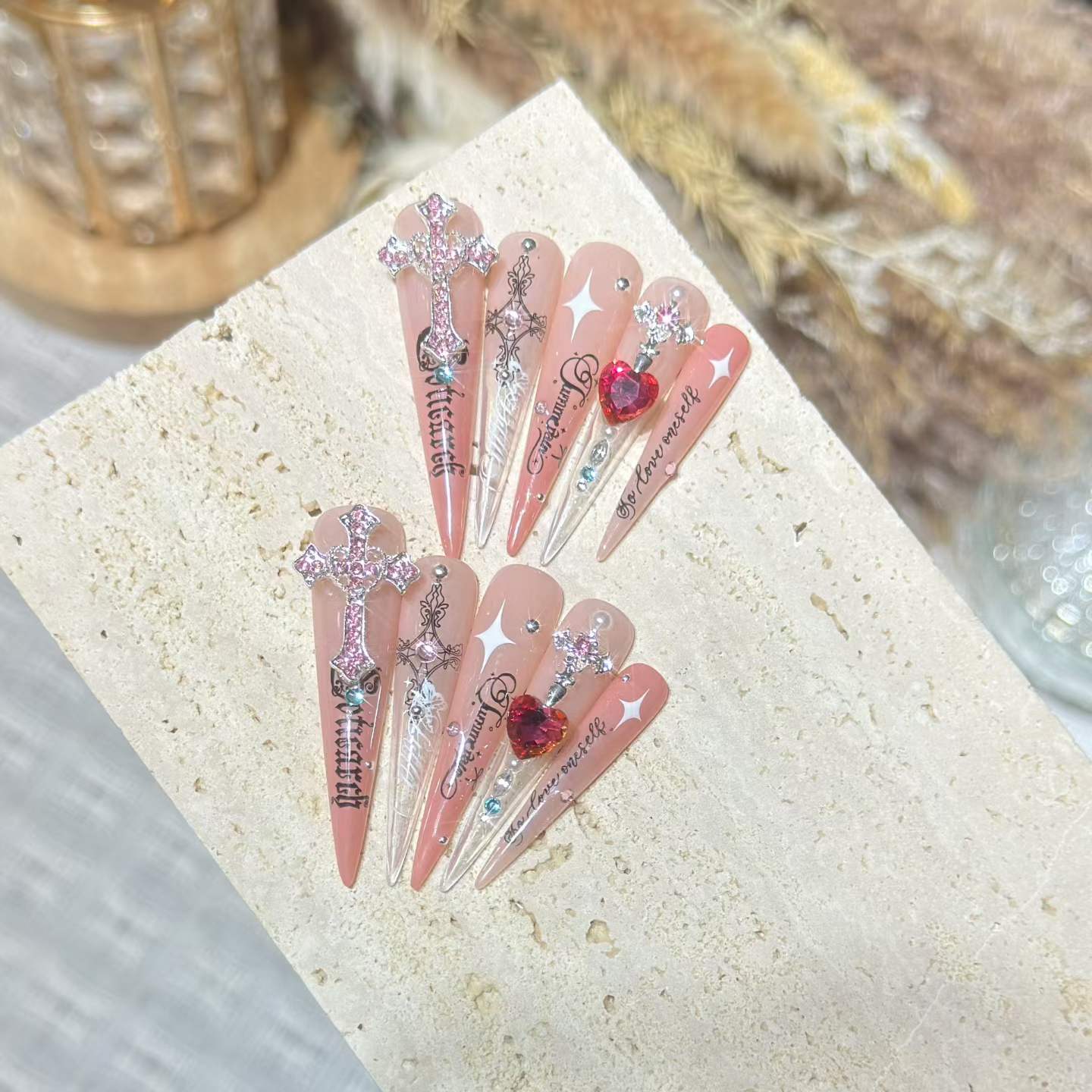
When customers compare press-on nails, the differences they feel — weight, flex, shine, how naturally they sit on the nail — come down mostly to one thing: the material. Whether you are buying wholesale or building a private label line, understanding press on nail materials is the difference between a product that sells on repeat and one that generates returns. Here is a practical breakdown of the main types, what each does well, and how to match material to your brand.
ABS Press-On Nails
ABS (acrylonitrile butadiene styrene) is the most common material for press-on nails, and for good reason. It is lightweight, holds printed detail well, and can be produced at a friendly cost — which makes it a strong choice for:
- Entry-level and trend-driven collections where price matters.
- Large-volume wholesale orders where unit cost drives margins.
- Colorful, printed and high-detail designs that do not need heavy structure.
ABS press on nails are typically a little firmer and less flexible than gel options. For many buyers, that is exactly what they want — a crisp, affordable set that still looks polished on the nail.
Soft Gel Press-On Nails
Soft gel press on nails are cured from a flexible gel, giving them a noticeably more natural feel. They tend to be thinner, more flexible, and more translucent at the cuticle — three traits customers often describe as “feels like a salon manicure.” Key characteristics:
- Natural look — soft gel hugs the natural nail and sits flatter than stiffer materials.
- Durability — the flexible structure resists cracking better under everyday wear.
- Premium positioning — usually priced above ABS, matching a higher perceived value.
Because the material itself is higher-value, soft gel sets are typically offered at higher wholesale prices and suit brands that emphasize quality and repeat customers.
Hard Gel Press-On Nails
Hard gel nails are cured harder and thicker, which makes them ideal for statement and structured designs. Their rigidity lets them carry:
- 3D and hand-set decorations such as charms, rhinestones and sculpted details.
- Longer lengths that need to hold their shape without bending.
- Bold, glossy looks that rely on a stable base.
Hard gel is less flexible than soft gel, so it is not always the best everyday-wear option — but for occasion and bridal sets, it is a favorite because the structure is built to impress.
Thickness and Finish Matter
Beyond the base material, two details define how a set feels and looks:
- Thickness — thinner press-ons (with adequate structure) typically sit flatter and look more natural; thicker ones feel sturdier but can look bulkier on short nail beds.
- Finish — matte, glossy, cat-eye, gradient and chrome all change the perception of quality. Consistent, even finishing is often what separates premium sets from budget ones.
When you evaluate samples, check both — a great print on a poorly finished edge will disappoint customers just as much as a bad design.
How Material Affects Cost and Quality
Material choice drives the biggest cost differences in press-on production. In general terms, ABS offers the most accessible pricing for large runs, soft gel sits above it as a premium everyday option, and hard gel with hand-set detail commands the highest price point. That does not mean expensive always means better — it means the material should match the promise your brand makes. A value collection on ABS and a premium line on soft gel can happily live under one roof.
Choosing the Right Material for Your Brand
There is no single “best” material — only the right fit for your audience and budget:
- New brands or high-volume resellers — start with ABS for trend sets, testing shapes and styles with lower risk.
- Quality-first D2C brands — soft gel press on nails reinforce a “salon-quality” message and encourage repeat purchase.
- Occasion and bridal lines — hard gel supports the elaborate, structural designs these customers look for.
Whichever you choose, always sample across materials before committing — feel the flex, check the finish, and test how each wears. Material choice also ties into your production route: handmade press on nails suit soft and hard gel detail, while machine made press on nails scale best for ABS and consistent color runs. Our collection includes ABS and gel options you can study as reference points, and our OEM and ODM services let you specify the exact material and finish for your line. Before you commit, read our guide to choosing a press on nail manufacturer. If you are unsure which suits your market, talk to us — we help brands pick the right materials every day.
Ready to start your press-on nail project?
Share your product idea and quantity to discuss a project-specific quote.
Get a Free Quote